fredag 11 november 2011

Flower of Fire.

Fire acts differently in space than on Earth. Sandra Olson, an aerospace engineer at NASA's Glenn Research Center, demonstrates just how differently in her art. This artwork is comprised of multiple overlays of three separate microgravity flame images. Each image is of flame spread over cellulose paper in a spacecraft ventilation flow in microgravity. The different colors represent different chemical reactions within the flame. The blue areas are caused by chemiluminescence (light produced by a chemical reaction.) The white, yellow and orange regions are due to glowing soot within the flame zone.

Microgravity combustion research at Glenn not only provides insights into spacecraft fire safety, but it has also been used to create award-winning art images. This image won first place in the 2011 Combustion Art Competition, held at the 7th U.S. National Combustion Meeting.

Sandra Olson created this kaleidoscopic collage of fire as an artistic side project to her research on combustion in space. The white, yellow, and orange colors reflect the increasing temperatures of soot within the flame, while blue is the glow of excited carbon and hydrogen bonds as the paper burns.

To compose the image Olson blended three video stills of burning paper freefalling in a drop tower, a tool used to simulate low-gravity conditions. Her creative approach earned her the top prize at the 2011 Combustion Art Competition at the 7th annual U.S. Combustion Meeting in Atlanta, Georgia.

Cool Picture. You can see the 'burning'.

lördag 15 oktober 2011

Biology needs a mathematical theory. The INBIOSA project.

The INBIOSA Project (www.inbiosa.eu) was launched in January 2011 with the support of the EU FP7 . The project will continue until the end of December 2011. The project investigators are Dr.Plamen L. Simeonov (JSRC, Germany) and Professor Leslie S.Smith (University of Stirling, UK) INBIOSA PP Presentation, Summary (long).

The long-term aim of the INBIOSA Project is to deliver answers to such questions as:

- what is computation? – in biological context;

- how useful is a computation? – for living systems, where “usefulness” is studied from the viewpoint of the entity performing the computation;

- to what extent can a computation be carried out? – in an organism or an ecosystem, with the available resources (power, time, number of computing elements, etc.).

Driving principles of the INBIOSA initiative:

• focusing on non-mainstream scientific research in mathematics and computation engineering targeting a synergetic integration and exchange with natural and life science disciplines;

• enforcing multidisciplinary approaches to investigation;

• identifying research areas which are crucial for accelerated, yet balanced, transformation of the future information society towards eco-awareness.

This project aims to investigate the imperatives of mathematics and computation in a cardinal new way by comprehending the fundamental principles of emergence, development and evolution in biology. The goal will be a set of novel mathematical formalisms capable of addressing the multiple facets of an integral model and a general theory of biocomputation within an adequate frame of relevance. Its base will be the realization of a long-term fundamental research programme in mathematics, biology and computation that we call Integral Biomathics (arxive-paper). A Post-Newtonian View into the Logos of Bios (On the New Meaning, Relations and Principles of Life in Science)...focused on the phenomena of emergence, adaptive dynamics and evolution of self-assembling, self-organizing, self-maintaining and self-replicating biosynthetic systems viewed from a newly-arranged perspective and understanding of computation and communication in the living nature.

Integral Biomathics is envisioned to discover and establish new relationships and deliver new insights into the interaction and interdependence between natural and artificial (human-created) phenomena for a number of scientific fields. It is expected to invent and develop new mathematical formalisms and provide a generalized framework and ecology for research in life, physical, social and engineering sciences.

STEPPING BEYOND THE NEWTONIAN PARADIGM IN BIOLOGY:

Accelerating the Discovery of the Biological Imperatives of a Computational Model of Life

The focus of the transformative research is biology-centric. The key leverageable idea is that careful extension of the science of living systems can be more effectively applied to modern problems than the prevailing paradigm. That paradigm is extended from abstractions in physics. While they have some universal application, and computational advantages, their use need not be the default.A new set of abstractions from biology can now be similarly extended. This is made possible by new formal tools to understand abstraction and enable computability.

We are in need of a theory which describes the biological processes in living organisms.

The commonly acknowledged opinion is that the problem of modern-day biological science is the absence of a unified theory. Dr. Plamen L. Simeonov (JSRC, Germany), coordinator of the project, commented: “Until now an enormous amount of data has been collected in the science of life, but that data alone doesn’t make a theory. The time is ripe for the establishment of a research program in the area which will support and eventually lead to the creation of a new biological theory.”

The laws and methods of physics cannot be unconditionally applied to the biological sciences due to the inconsistency of the systems in biology, and more generally to the differences in nature of the subjects studied by these two scientific disciplines. A new type of super-mathematics, unifying and extending diverse fields of mathematics to tackle biological problems is necessary, according to the attending the conference scientists. “We need a mathematics that can describe such an ever-changing, indeterminate, yet persistent “thing” , including how it maintains its “identity” within certain boundary conditions, yet ceases to function outside of those boundaries. Such an emergent, developmental and evolutionary mathematics does not exist“, is the opinion of the scientists.

“Equations of motion for biological system may not be appropriate. We should seek rules of organisation for living systems, and also rules of organisation for neural systems“, commentedProf. Leslie S. Smith, University of Stirling, UK, co-investigator on the project and organizer of the Stirling conference. “There may be generalizations of logic which include stochasticity. Further, we should also consider generalizations of information and information theory which might be more appropriate for living systems”, he added.

In contrast to the classical science, which is based on the externalist approach (or third person descriptions) in most of its areas, we also need to adopt the internalist approach (first person descriptions) when dealing with biological problems.

“We should consider time, and also versions of central pattern generators that apply to cognitive (rather than motor) systems”, is one of the conclusions the scientists reached.

Research roadmaps in computational systems biology, autonomic computing and communications target the enrichment of knowledge and technology transfer between (analytic) life sciences and (synthetic) engineering sciences. We claim that it is impossible to make significant progress in this transdisciplinary field without a breakthrough paradigm change towards biologically driven mathematics and computation. A profoundly new understanding of the role of biology in natural and engineering sciences needs to be set out.


“We are unable at present to identify in rigorous fashion what it is about cellular processes that set them apart from synthetic devices made of silicon and steel,” stated Prof. Dennis Bray (University of Cambridge, UK), the author of “Wetware: A Computer in Every Living Cell”.

söndag 11 september 2011

Enya

ENYA - China Roses

Who can tell me if we have heaven,
Who can say the way it should be;
Moonlight holly, the sappho comet,
Angels tears below a tree.

You talk of the break of morning
As you view the new aurora,
Cloud in crimson, the key of heaven,
One love carved in acajou.

One told me of china roses,
One a thousand nights and one night,
Earths last picture, the end of evening:
Hue of indigo and blue.

A new moon leads me to
Woods of dreams and I follow.
A new world waits for me;
My dream, my way.

I know that if I have heaven
There is nothing to desire.
Rain and river, a world of wonder
May be paradise to me.

lördag 20 augusti 2011

Topi Sorsakoski - Olet kaikki


This remarcable man died of cancer in relatively young age. His voice isn't beautiful, nor his person, and still he sings like few. With such big feeling. I have met him 'Live' on a dance once. This song is so special, and I always think of a very special person when I hear it :)

A truly finnish song.

There is no Death, only a transmission. Like a phase shift. A beautiful place. Green flowering meadows.

fredag 19 augusti 2011

A Priori


What Did I Do Today?

Today I left some dishes dirty,
The bed got made around 3:30.
The diapers soaked a little longer,
The odor grew a little stronger.
The crumbs I spilled the day before
Are staring at me from the floor.
The fingerprints there on the wall
Will likely be there still next fall.
The dirty streaks on those windowpanes
Will still be there next time it rains.
Shame on you, you sit and say,
Just what did you do today?

I held a baby till she slept,

I held a toddler while she wept.
I played a game of hide and seek,
I squeezed a toy so it would squeak.
I pulled a wagon, sang a song,
Taught a child right from wrong.
What did I do this whole day through?
Not much that shows, I guess that's true.
Unless you think that what I've done,
Might be important to someone
With deep blue eyes and soft blonde hair,
If that is true...I've done my share.


I am very much of the same mind - lovely


onsdag 10 augusti 2011

Inertia - change I. Of what?

In Nature, two types of spontaneous structures exist: structures at equilibrium such as crystals, and structures not at equilibrium that constantly dissipate energy such as whirlpools requiring the participation of energy flows coupled by nonlinear processes. This latter is typical for Life too. Whirlpools and Life has much in common. Ilya Prigogine talked of dissipative systems and structures and chaos, and got 1977 Nobel Prize. Most systems found in nature are not in thermodynamic equilibrium; for they are changing or can be triggered to change over time, and are continuously and discontinuously subject to flux of matter and energy to and from other systems.

The origin of life cannot be 'discovered', it has to be re-invented." A. Eschenmoser, Tetrahedron, 2007, 63, 12821-12844.

Why are there balance and counteraction? Life creates unstabilities, noise, change? Actions that requires an reaction. Stress and adaption. Homeostasis.

We all know that living structures are reactive, flexible, often formable, soft = NOT descreate and determined. But also that it need some fixed structures like bones, or cytosceletons. Hardness and flexibility. Is Life always enclosed in structure?

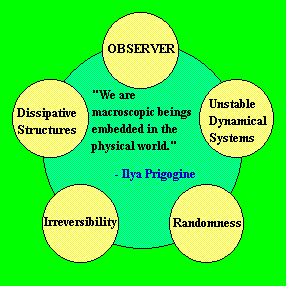
The Dynamic Process of Communication:


  • Observer
  • Unstable dynamical systems
  • Randomness, nonlinearity
  • Irreversibility
  • Dissipative Structures
  • Observer
  • Demonstrations of impossibility, whether in relativity, quantum mechanics, or thermodynamics, have shown that nature cannot be described "from the outside", as if by a spectator. Description is a dialogue, communication, and this communication is subject to constraints that demonstrate that we are macroscopic beings embedded in the physical world. We are evolved dissipative structures. The time symmetry is broken in the following way: the existence of irreversible processes on the microscopic level through kinetic equations violates the symmetry of the canonical equations. And dissipative structures may, in turn, break the symmetries of space-time.
    This is at the heart of Einsteins problem with quantum gravity. Inertia - change. Which takes us immidiately to the second law of thermodynamics. It works differently for living and ordinary matter? Why? And has it anything to do with the first law and the E=mc2? Energy is the interesting part, not only mass? Gauge fields and matter fields counterinteract. The fluctuation-dissipation theorem, or mass compressability*, says Radoslav Bozov.
     

    The conservation of mass is a fundamental concept of physics, as is the conservation of energy. Within some problem domain, the amount of mass remains constant; mass is neither created or destroyed. The mass of any object is simply the volume that the object occupies times the density of the object. For a fluid (liquid or gas) the density, volume, and shape of the object can all change within the domain with time and mass can move through the domain.
    *in the boson case, the connection between density fluctuations and compressibility was used to study superfluidity in a two-dimensional system.

    In addition to gauge fields, in nature there also are matter fields. The matter fields describe things such as electrons, neutrinos, quarks, and possibly Higgs particles. Gauge fields mediate “forces” between particles described by matter fields (and between additional particles described by the gauge fields themselves). Edward Witten 2009.
    The great insight was "Do not quantize", tells us Matti Pitkänen. No supergravity for him.

    What really IS the secret with Life?

    Prigogine has been one of my leading stars through my Journey. 1980 he wrote From Being to Becoming: Time and complexity in Physical Sciences. He has three main theses:
    (1) irreversible processes are as REAL as reversible ones.
    (2) irreversible processes play a fundamental CONSTRUCTIVE role in the physical world.
    (3) irreversibility is deeply rooted in dynamics.
    Most of the directional processes are irreversible or hypercyclic. Very few are totally reversible,and they are not at equilibrium. He adds, "This formulation leads to a unified picture that enables us to relate many aspects of our observations of physical systems to biological ones.
    "Biological order is both architectural and functional; furthermore, at the cellular and supercellular levels, it manifests itself by a series of structures and coupled functions of growing complexity and hierarchical character. This is contrary to the concept of evolution as described in the thermodynamics of isolated systems, which leads simply ... to 'disorder.' ... The unexpected new feature is that nonequilibrium may ... lead to a new type of structure, the DISSIPATIVE structures, which are essential in the understanding of coherence and organization in the nonequilibrium world in which we live."
    Again structure and function, inertia and change.

    Order out of Chaos, Prigogine 1984 in his intellectual odyssey from classical thermodynamics, through linear nonequilibrium thermodynamics, and finally to his holy grail of nonlinear nonequilibrium thermodynamics, and how the processes of entropy and energy scattering can lead a system open to its environment to evolve greater complexity.

    Open systems evolve complexity! Seen in structure of proteins? Molecular machines? But if we look only at complexity, then we forget the open system.
    The irreversibility (not invariant) in non-equilibrium thermodynamics, leading both to structure and function change. Take only the example with diffusion over a membrane.

    The End of Certainty, 1997.
    How is it, for instance, that basic principles of quantum mechanics-which lack any differentiation between forward and backward directions in time-can explain a world with an "arrow of time" headed unambiguously forward? And how do we escape classical physics' assertion that the world is deterministic? Prigogine explores deterministic chaos, nonequilibrium thermodynamics, and even cosmology and the origin of the universe... There is a way in which biology could be "reduced" to physics, but only if we learn to define "physics" very differently than we do today.
    Prigogine's explanation of Henri Poincaré's proof that contemporary physics' belief in reversible, closed-system, deterministic modeling actually precludes the arrow of time, obviates self-organization, and prohibits the existence of life itself. In short, Prigogine shows that Poincaré proved that biology CANNOT be reduced to contemporary physics, and he even proved why (the existence of Poincaré resonances). It's an exquisitely beautiful insight.

    Ironically, when the problems of biology has again and again been said to be the determinism and decoherence, seen from the light of Schrödinger and the double-slit experiment. Something is simply WRONG here, Lubos. Where is the build-up?

    Points toward a revolutionary realignment of fundamental physical principles, theoretical perspectives, and even scientific methodology - a coherent major shift in the foundational paradigms of physical science. Both Einstein and Schrödinger knew that contemporary physics is inadequate to explain more complex phenomena... like biological life.
    Newton's laws were once considered to be final.

    Prigogine 1997, Non-linear Science and the Laws of Nature: Simple examples such as the Bernouilli shift and the anharmonic lattice are studied. It is shown that instability as well as the thermodynamic limit lead to a new formulation of laws of nature in terms of probabilities (instead of trajectories or wave functions), following the realization that large classes of systems may exhibit abrupt transitions, a multiplicity of states, coherent structures or a seemingly erratic motion characterized by unpredictability often referred to as deterministic chaos. Distance from equilibrium, and therefore the arrow of time, plays an essential role in these processes, somewhat like temperature in equilibrium physics.
    Time is an operator.
    The 19th century has left us with a conflicting heritage. On one side, there are the 'laws of nature' such as Newton's law which relates acceleration to force. This law is time reversible and deterministic. If we know the initial condition of a dynamical system, we can predict its state at an arbitrary time, be it in the future or in the past. There is no distinction between past and future. These characteristics remain true in relativity and quantum mechanics, as the Einstein or Schrrdinger equations are also reversible and deterministic. On the other hand, the famous 'second law' of thermodynamics, associated with the increase of entropy, expresses the arrow of time.
    Stuart Kauffman has a probalistic approch in his "The origin of order."

    "Is the moon there when nobody looks
    ", asked Einstein. The observer - effect and consciousness. Are there consciousness outside living matter? The Anthropic effect simply cannot be true.

    What if we shift the focus from matter to waves, or probabilities, uncertainty? We start to explain our Universe in waves? Is the Universe Analog or Digital, asked FQXI in a contest last year, where I contributed. Maybe the answer is neither, but a TRINITY (particles-strings-waves) or (by replacing 1-dimensional strings with 3-dimensional light-like surfaces = self-containing = observer)? Or even a quartett? A tangent on a tangent? A quantized gauge theory with a mass gap? Maybe a superposition of many kinds (7 trees in one), so there are no definitive answer (E8?)? Also the fact that matter is only about 5% of total energy budget in Universe tells a lot. Dark matter is much more, about 20%. In which part is Life? WHAT is Life?

    "One can best feel in dealing with living things how primitive physics still is," said Einstein.

    If the equations of evolution are non-linear we observe, in general, bifurcations which lead to new spatio-temporal structures. The 'dissipative structures' achieved in this way are therefore the consequences of non-linearity. In this sense we may even consider life, with its essential non-equilibrium properties, as the manifestation of non-linearity. Close to equilibrium, entropy is maximum or free energy minimum. Free energy is reaction energy. To keep the reactivity negentropy must be maximized in living structures.

    "Laplace's demon", cannot be true. Laplace's demon was based on the premise of reversibility and classical mechanics. Invariance? Causal or scientific determinism, if someone knows the precise location and momentum of every atom in the universe, their past and future values for any given time ... killed by irreversibility (time?) and quantum world? Einsteins problem again. With a note, There has recently been proposed a limit on the computational power of the universe, i.e. the ability of Laplace's Demon to process an infinite amount of information. The limit is based on the maximum entropy of the universe, the speed of light, and the minimum amount of time taken to move information across the Planck length, and the figure was shown to be about 10120 bits. Accordingly, anything that requires more than this amount of data cannot be computed in the amount of time that has elapsed so far in the universe. The Lambda-cosmological constant-dark energy problem.

    The entire physical Universe cannot be fully understood by any single inference system that exists within it. on Cantor, Gödel and Turing’s theorems of incompleteness and uncountable.

    No hypothetical being with a “vast intellect”, such that, with full knowledge of the state of the Universe at one time, it can completely predict the future and recall the past with no uncertainty whatsoever. Do we call him the classic God? Are there a quantum God?

    Wolpert’s results (acc. to Binder) are particularly compelling because they are totally independent of both the details of the laws of physics and the computational characteristics of the machines. Wolpert, D. H. Physica D 237, 1257–1281 (2008). A prescription for deriving the laws of nature was proposed by Roy Frieden 2004. Science from Fisher Information: A Unification (Cambridge Univ. Press). Producing multiple solutions, as in M-theory-landscape?

    Non-linear time? Non-linear information? Through the attractor reconstruction method, in which a time series is converted into a geometrical trajectory in higher-dimensional spaces? Kantz, H. & Schreiber, T. Nonlinear Time Series Analysis (Cambridge Univ. Press, 2004). Sounds very TGD'ish, in light-like CD-diamonds and zero energy ontology.

    One can also know more than everything (superpositions of states). Quantum walk is another example (scattering?), as in photosynthesis or massively parallel computers (right brainhalf?), touching at a distance and Bells inequality, lattice with different spins where forward and backward propagating fields pick up polarization rotations in opposite senses, and may even reverse time... Quantum thermodynamics?
    Undoing a quantum measurement
    , quantum phase transitions... (non-local PDE's) How does a bosonic system store information about the Fermi energy, show how this fractal behavior would influence the thermodynamic response functions of liquid 3He, a fermionic fluid. The results could potentially be applied to understanding quantum critical behavior in heavy-fermion metals and high-temperature superconductors.

    The Yang-Mills equations are analogous to the vacuum Einstein equations Rμν = 0 (where R is the Ricci tensor). They are nonlinear hyperbolic wave equations. Most applications of partial differential equations involve domains with boundaries and periods, and use matrices (for scattering waves). Asymptotic charachter and resonance are other nonlinear equations. See Schrödinger eq. book.

    Is Future Given? 2003, when Prigogine died. No fate, the future has not been determined.

    He has consistently held that nature is probabilistic. Much of his motivation seems to have been in sorting out why Boltzman and Gibbs failed to satisfy the science community that their statistical physics explained the 2nd law, due to reversible classical equations and Poincare recurrences. However in order to make his probabilistic argument he may have created a loophole. He points to the Langevin equation as an irreversible equation with noise (friction) and he says Poincare should have connected nonintegrability with irreversibility and most dynamics are nonintegrable. However everyone agrees some (simple) systems are reversible (pendulums etc) so how can all of nature be stochastic? Maybe because the noise terms tend to but never go to zero?
    'The rate of change of entropy with time for a nonequilibrium stochastic process is always positive = the arrow of time.'

    In this case Poincare recurrence maybe a mere statistical fluctuation with no actuality. (Prigogine says it is false because he introduces new microscopic dynamics, the irreversible processes. At the website secondlaw.com the thermodynamic explanation of entropy is fundamental as it is a measure of energy diffusion, and not randomness or uncertainty, as the tool of statistical entropy would imply. In this way the 2 approaches are not contradictory; the statistical is merely a measurement tool for observers while the thermodynamic is real dynamics requiring no observers (ice melts, water crystalizes etc long before man was around). If anything this should be viewed as fundamental as it is a direct measurement of the physical movement of heat.

    One should not confuse information theory and measurement techniques with real underlying dynamics. When some authors say 'entropy is not a property of a system, it is a property of our description of the system. The quantum measuremental tools are badly developed.

    Prigogine has shown mathematically how irreversibility can apply at the microscopic level for nonintegral systems (in agreement with macroscopics) due to non-local persistent interactions.

    Non-linearity is also fractals, hierarchy, self-assembly. Infinity. No zero, no end.

    The importance of the individual's actions implies a reflection of each person on the responsibilities that each one assumes when taking or acting upon a decision. This responsibility is associated with the freedom of thought as well as a critical analysis of fashions, customs, preconceived ideas, and ideologies, externally imposed: exactly contrary to the ideas of those who wish us to be "perfect consumers" in a world dominated only by monetary wealth.


    Numerous molecules self-organize themselves in living organisms: actin and tubulin into filaments, lipids and proteins into membranes. Filaments and membranes are organized in cells that themselves are self-organized in tissues then in organs, and finally form the entire organism.

    Assemblies of molecules are formed and destroyed by weak interaction with binding energies (what is that energy in reality?) comparable to the thermal energy, rendering them very sensitive to the external conditions and easily adaptable to those conditions.

    Such self-organization patterns are not a feature of living systems solely; they occur in many physical and chemical systems composed for instance of molecules that are amphiphylic (both hydrophylic and hydrophobic), leading the way from simple material to the construction of biomimetic and microrobotic systems.

    Adaption relaxes stress. Energy is 'chrystallized', fixed. Movement diminished. Determinism and decoherence increased. Consequently coherence must be increased when the free energy is increased.

    And synchrony?

    "Maybe the details of the neurons are completely irrelevant. Maybe it is only a property of oscillators." says Babette K. Dellen. Neurons are composed of many elements and are typically nonlinear and, for example, have been modeled as interconnected, or "coupled", oscillators because of the way they interact with one another. Coupled oscillators can be imagined as being tethered to their nearest neighbor, thus influencing their movement. Neurons, on the other hand, may display repetitive electrical activity that can be influenced by the activity of neighboring neurons. Sebastian F. Brandt et coll. January 2006 Physical Review Letters.

    The origin of life was marked by the transition from chemical reactions to self-replicating molecular entities capable of evolving by natural selection. The structure and function of many biological molecules and supramolecular assemblies are today accessible in simulated “prebiotic’’ conditions; nevertheless we are still unable to establish a link between these structures and the complex metabolisms at work in living matter.

    There is no doubt that self-organization constitutes a key concept to understand collective phenomena, be it at the chemical, biological of behavioural level.
    Origins of Life: Self-Organization and/or Biological Evolution? Paris 2008 Maryvonne Gérin et Marie-Christine Maurel.
     
    Self and the collective? To be a we there must be an I first. Borders must be created to have an interference. Particles- strings- waves, says Radoslav Bozov. Inertia and change.
    To have 'a jump and a consciousness', says Matti Pitkänen..
    To Prigogine, irreversibility is a fundamental property of physics. Prigogine proposes that entropy production is part of an operator (operators map functions onto functions), and time is an operator. And that the time that we are all familiar with from classical mechanics is just an ensemble average of this operator with a state vector. I.e. "ordinary" time is an average over his new time operator. And that "age" is dependent of the distibution.
    So what does that mean about operators..? Let's say that we wish to know the time evolution of a system. In both quantum mechanics and classical mechanics, the Hamiltonian operator determines how the system will evolve in time. The evolution that we are all familiar with is a reversible and deterministic evolution (We can say that the reversible change of a wave function that represents the quantum system corresponds to a reversible motion along a trajectory that represents the classical system.) The wave function or trajectory represents the maximum knowledge of the system.
    Prigogine has incorporated reversible and irreversible parts into a new microscopic equation/description. The equation contains an operator analogous to the Hamiltonian, that is a new "time evolution operator" that now can drive the system to both equilibrium or nonequilibrium states. Entropy is produced by the even part of the new time evolution operator and he has defined an operator for that.
    An example that Prigogine gives looks at the conventional and his unconventional determination of energy levels in a quantum system. In the conventional quantum mechanics, both the energy levels and the time evolution of them are determined by the same quantity: the Hamiltonian operator. Prigogine's method allows him to use two different operators: the time operator for time evolution and another operator (a "superoperator" that can act on other operators) to determine the energy levels. So in this way, instead of having the "particle" and the "interaction" (conventional view), we have the physical process that contains electrons, photons, etc. that drive the total system. This process is "real" and cannot be "transformed" away by any change of representation.
    Or another way to look at it: the classical order says particles come first and the Second Law of Thermodynamics comes later, while Prigogine says that we must first introduce the Second Law before being able to define the entities.
    Another one of Prigigine's main themes is that nonlinear interactions frequently lead to order (which he calls "dissipative structures") through fluctuations. A dissipative structure is order visible on a macroscale which can exchange energy with the outside world. In particular, if the system is in a far-from-equilibrium-state this can happen.
    Conclusion: Scattering, quantum walk, parallell processing, hierarchy, fractality, entanglement are all related phenomena, that have big influence on the process of Life. Even thermodynamics itself may express non-locality through dispersion and scattering.

    ...the increase of entropy can be far more accurately described [than simply disorder] using terms such as ‘dispersal of energy,’ ‘spreading and sharing of energy,’ and ‘spatial and temporal spreading.’ In decoherence theory, a similar metaphor is used to describe the phenomena involved with quantum non-locality, superposition, and entanglement. Specifically the wavefunction of a quantum entity, such as a sub-atomic particle or photon is not seen to collapse but rather is transferred through interactions to a system and/or its environment. This suggests there may be a common basis for entropy and non-locality.
    Prigogine is primarily a chemist. As I understand it, his main discovery has been the discovery of "chemical clocks." These are chemical reactions that oscillate in a very regular and precise way. Prigogine predicted that they should exist from a theoretical chemistry standpoint several decades ago. In the late 1950's, one of his research group came back from a visit with a colleague in Russia, announcing that they had a chemical reaction that did just what Prigogine predicted. The reaction is now known as the Belousov-Zhabotininskii reaction and it is the oxidation of citric acid by potassium bromate catalyzed by the ceric-cerous ion couple.

    fredag 5 augusti 2011

    Artificial life conference, Paris.

    Next week it’s the European Artificial Life Conference (ECAL) 2011 in Paris.

    Artificial Life is an interdisciplinary undertaking that investigates the fundamental properties of living systems through the simulation and synthesis of biological entities and processes. It also attempts to design and build artificial systems that display properties of organisms, or societies of organisms, out of abiotic or virtual parts.

    ECAL, the European Conference on Artificial Life, is a biennial event that alternates with the US-based Alife conference series.

    Download the complete PDF program booklet (53-page, includes all the abstracts)


    I borrow this!

    So what is life?

    Posted by 5.8. on steennewmexico

    This question, of course, has to be addressed, if you want to create life from scratch. At our FLinT center in Denmark we study and implement life-like and minimal living processes in a variety of materials and systems. In particular we seek to assemble a minimal protocell, a minimal physicochemically based cell.

    First a little history:

    Von Neumann, the inventor of the modern computer, realized that if life is a physical process, it should be possible to implement life in other media than biochemistry. He was one of the first to propose the possibility of implementing genuine living processes in computers, robots and other media. This perspective, while still controversial, is rapidly gaining momentum in many science and engineering communities and it is the basis for our work. Ilya Prigogine reemphasized and clarified the importance of utilizing free energy fluxes to generate order in physicochemical systems through self-organization. The metabolic processes in our protocells utilize free energy to maintain local order. Our metabolism is a thermodynamic engine that locally drives our system away from equilibrium. Manfred Eigen pointed out that autocatalysis between functional physicochemical components could be a mechanism for the emergence of early life and that autocatalysis can enhance a systems ability to maintain information. All our protocellular components are autocatalytically coupled.

    Now, what is minimal physicochemical life then?

    There is not a generally agreed upon definition of life within the scientific community, as there is a grey zone of interesting processes between nonliving and living matter. Our work on assembling minimal physicochemical life is based on implementing systems that meets three criteria, which most modern biological life forms satisfy.

    In my opinion, and from a practical point of view, a minimal living physicochemical system needs to:

    1. use free energy to convert resources from the environment into building blocks so that it can grow and reproduce,
    2. have the growth and division processes at least partly controlled by inheritable information, and
    3. allow the inheritable information to change slightly from one generation to the next, thereby permitting variation of the growth and division processes and thus allow selection and hence evolution.

    How difficult can that be? Implementing these three simple criteria?

    Well, I’m telling you, it’s not easy. It’s very complicated, as it takes many components to fall into place at the same time, and these components are not only of scientific nature.

    For me personally, it took many years to convince any funding agency (peer review committee), that this kind of work is even possible. Secondly, we had to convince the committees that this work is worthy to spent tax payers money on: “In which sense will assembling minimal life benefit society?” Very important question, which I’ll get back to in some later blog. Only very few funding agencies give you money for basic, or curiosity driven, science.

    I’ll say, getting continued funding for our activities is still, and has been, the hardest part of creating life. It’s certainly more complex than doing the science.

    Secondly, due to the necessary complexities of the involved physicochemical systems, this kind of science is not a one-man activity. It takes a small village of skilled scientists from different disciplines, which gets us back to the previous point about money, as well as being able to host an exciting research environment.

    Finally, and of course most importantly, it takes human wondering and amazement about why things are the way they are, as well as the courage to dream about how things could be. And it takes very good people. Without good people nothing moves. And then it takes tenacity. A dedicated effort day after day (and sometimes nights), month after month, year after year.

    So don’t become a scientist unless you can’t help it. It consumes too much of you. But if you can’t help it, playing with your imagination and dreaming up new stuff, I believe is one of the most exhilarating things you can do as a human being. However, fundraising, writing grants, doing budgets, paying bills, dealing with whatever organization you are a part of, managing very smart people (herding cats), teaching, correcting exams, etc., is exhausting and can take some of the fun out of it. But that’s how it is. There are no free lunch.


    fredag 24 juni 2011

    My sons wedding.


    Such a beautiful couple. So similar. I wish them all luck. And good weather all the day...
    (This is an official picture.)

    And I was on time!

    lördag 18 juni 2011

    New eyes?


    I was visiting the first beauty saloon ever in my life - for my sons wedding. The result was seen mostly on my eyes, somehow bigger and darker. The eyes was quite sharp before too :) Look!

    Was it worth the effort? Doubtful!

    tisdag 14 juni 2011

    Interview with Jarmo Mäkelä, the FQXI winner.

    Top prize of $10,000 and FQXi Membership goes to ...

    Jarmo Mäkelä from Vaasa University of Applied Sciences in Vaasa, Finland, for his essay "Is Reality Digital or Analog" recording a late-night conversation with Isaac Newton. In his essay, Jarmo reports that Newton decidedly told him "Digital, of course".

    In Vasabladet today is an article about the FQXI-winner, Jarmo Mäkelä, after a hint from me.


    'Physicistwinner likes blackholes' is the title. A scanned picture from the newspaper.

    He works as a teacher, sinse 10 years, in math and physics at Vaasa Technical Highschool educating engineers (information and data). He says he enjoys his work. Most of the students comes from abroad, and the teaching language is english. His research is mainly theoretic, as a hobby. He looks at gravitation and blackholes. This prize has no practical influence for his future, but is seen mostly in his CV.

    Jarmo is 47 years old, from Seinäjoki (about 50 km's from my work), did his thesis at Jyväskylä University. He has a wife and two kids. Interests: physical exercise, skiing, classic music and history.

    Quite scare information.

    A search gave these:
    From wikipedia:
    Jarmo Mäkelä (2010). "Notes Concerning "On the Origin of Gravity and the Laws of Newton" by E. Verlinde (arXiv:1001.0785)". arXiv:1001.3808
    We point out that certain equations which, in a very recent paper written by E. Verlinde, are postulated as a starting point for a thermodynamical derivation of classical gravity, are actually consequences of a specific microscopic model of spacetime, which has been published earlier.
    E.P. Verlinde. "On the Origin of Gravity and the Laws of Newton". JHEP 04, 29 (2011). doi:10.1007/JHEP04(2011)029

    On arxive he has 24 publications. Alone or with collaborators, many published in journals.
    On Distance and Area 1011.2052
    Partition Function of Spacetime 0810.4910
    A Simple Quantum-Mechanical Model of Spacetime II: Thermodynamics of Spacetime 0805.3955
    -
    I: Microscopic Properties of Spacetime 0805.3952
    Pioneer Effect: An Interesting Numerical Coincidence 0710.5460
    Quantum-Mechanical Model of Spacetime gr-qc/0701128
    Gravitation and Thermodynamics: The Einstein Equation of State Revisited gr-qc/0612078
    Area and Entropy: A New Perspective gr-qc/0605098
    Radiation of the Inner Horizon of the Reissner-Nordström Black Hole gr-qc/0508095
    Accelerating Observers, Area and Entropy gr-qc/0506087
    Entropy of Spacelike Two-Surfaces of Spacetime gr-qc/0406032
    Spacetime Foam Model of the Schwarzschild Horizon gr-qc/0307025
    Thermodynamical Properties of Horizons gr-qc/0205128
    Microscopic Properties of Horizons gr-qc/0108037
    Quantum-mechanical model of the Kerr-Newman black hole gr-qc/0012055
    Constraints on Area Variables in Regge Calculus gr-qc/0011006
    Microscopic Black Hole Pairs in Highly-Excited States gr-qc/0006070
    How to interpret black hole entropy? gr-qc/9812075
    Variation of Area Variables in Regge Calculus gr-qc/9801022
    A Quantum Mechanical Model of the Reissner-Nordstrom Black Hole gr-qc/9708029
    Black Hole Spectrum: Continuous or Discrete? gr-qc/9609001
    Area spectrum of the Schwarzschild black hole gr-qc/9605058
    Schroedinger Equation of the Schwarzschild Black Hole gr-qc/9602008

    and...
    If it pleases the court, so to speak, I too have a series of hypothesis that have to do with the vacuum energy behavior of Jarmo Makela's simply-connected quantized space-time models, but I don't go around shitting up the boards with Lubos Motl-style ex-string theorist borderline crankiness, mostly because no one asked or cares much around here about the Verlinde Hypothesis.

    I guess I like him...

    söndag 12 juni 2011

    Demetrios Christodoulou & Richard Hamilton.

    Demetrios Christodoulou one of the Shaw Prize winners has one single article from 2008 on arXive, a whole book on 'The Formation of Black Holes in General Relativity', a book where a result which complements the stability result is proved. Namely, that a sufficiently strong flux of incoming gravitational waves leads to the formation of a black hole. Prologue 34 p, sensible for everyone. Read it!

    The Formation of Black Holes in General Relativity, (monograph, 589 pp.),
    EMS Monographs in Mathematics, EMS Publishing House (ISBN 978-3-03719-068-5), 2009.

    Research field: Partial di fferential equations, geometric analysis, general relativity, fluid mechanics. His publications started from1970 with black holes, which also was his theme for the thesis 1971. Investigations in Gravitational Collapse and the Physics of Black Holes. So I guess he is qualified enough. Mathematical Problems of General Relativity I, 2008, The formation of shocks in 3-dimensional fluids, The Euler equations of compressible fluid flow, 2007, Recent developments in nonlinear hyperbolic PDE, 2001 etc.

    On wikipedia: well known in the field of general relativity for his proof, together with Sergiu Klainerman, of the nonlinear stability of the Minkowski spacetime of special relativity in the framework of general relativity. The extraordinarily difficult proof of the stability result is laid out in detail.
    • Christodoulou, Demetrios & Klainerman, Sergiu (1993). The global nonlinear stability of the Minkowski space. Princeton: Princeton University Press. ISBN 0-691-08777-6.
    • Christodoulou, Demetrios (2000). The action principle and partial differential equations. Princeton: Princeton University Press. ISBN 0-691-04957-2.

    Richard Hamilton's mathematical contributions are primarily in the field of differential geometry and more specifically geometric analysis. He is best known for having discovered the Ricci flow and suggesting the research program that ultimately led to the proof, by Grigori Perelman, of the Thurston geometrization conjecture and the solution of the Poincaré conjecture. Research field: Partial differential equations, differential geometry. (Peter Woit is also at the same institution. Algebraic Geometry, Mathematical Physics and Number Theory are other fields.) Woits blog. Not many words for the 1mill prize! The second Nobel?

    Several stages of Ricci flow on a 2D manifold. Wikipedia. Informally, the Ricci flow tends to expand negatively curved regions of the manifold, and contract positively curved regions.

    Colombia Universitys release. Analytic number theory is the study of the distribution of prime numbers. One of the most important unsolved problems in mathematics is the Riemann hypothesis about the zeros of the Riemann zeta function, which gives a square root type error term for the number of primes in a large interval. One of the greatest applications of Grothendieck's theory of schemes is Deligne's proof of the Riemann hypothesis for L-functions for varieties over finite fields (which was first formulated by Weil). Thanks to the profound insight of Langlands, now embodied in the Langlands program: there is a sweeping vision of connections between automorphic L-functions on the one hand, and motivic L-functions, on the other. This vision encompasses the Artin and Shimura-Taniyama conjectures, both of which played a key role in Wiles' proof of Fermat last theorem. The main technique of Wiles, the deformation of Galois representations, is a new direction, now quite extensively developed

    Wiles' proof of his modularity lifting theorems is a perfect illustration of p-adic techniques in number theory where the basic objects are deformation of Galois representations, congruences between modular forms, and their deep connections with special values of L-functions. Another spectacular illustration of the p-adic techniques for automorphic forms attached to higher rank reductive groups is the recent proof of the Sato-Tate conjecture. Mazur's theory of deformations of Galois representations used in Wiles' proof has been inspired by the theory of p-adic families of automorphic forms developed originally by Hida. This theory has been developing for reductive groups of higher rank and has many powerful applications for the understanding of the connections between L-functions (or p-adic L-functions) and Galois representations which are at the heart of modern research in algebraic number theory and arithmetic geometry. The theory of p-adic families has also inspired some of the new developments of p-adic Hodge theory and the so-called p-adic Langlands program which establishes a conjectural connection between p-adic Galois representations of a local field of residual characteristic p and certain p-adic representations of p-adic reductive groups. These subjects where the notion of p-adic variation is involved are advancing very quickly and a substantial breakthrough is expected in the near future.

    From 1996 Oswald Veblen Prize motivations.
    The Ricci flow equations were introduced to geometers by Hamilton in 1982 (“Three manifolds with positive Ricci curvature”, J. Differential Geometry 17 (1982), 255–306). These equations form a very nonlinear system of differential equations (of essentially parabolic type) for the time evolution of a Riemannian metric on a smooth manifold. The equations assert simply that the time derivative of the metric is equal to minus twice the Ricci curvature tensor. (The Ricci curvature tensor is a symmetric, rank two tensor which is obtained by a natural average of the sectional curvatures.) This flow equation can be thought of as a nonlinear heat equation for the Riemannian metric. After an appropriate, time-dependent rescaling, the static solutions are simply the Einstein metrics. In introducing the Ricci flow equations, Hamilton proved that compact, three-dimensional manifolds with positive definite Ricci curvature are diffeomorphic to spherical space forms. (These are quotients of the three-dimensional sphere by free, finite
    group actions.)
    ... understand the nature of the singularities which arise under the flow. (Hamilton proved that singularities do not arise in three dimensions when the Ricci curvature starts out positive.)
    Hamilton has come to understand the geometric constraints on the singularities which arise under the Ricci flow on a compact, threedimensional Riemannian manifold and under a related flow equation (for the “isotropic curvature tensor”) on a compact, four-dimensional manifold. This understanding has allowed him, in many cases, to classify all possible singularities of the flow. In the four-dimensional case, Hamilton was recently able to give a topological characterization of the possible singularities which arise from the isotropic curvature tensor flow if the starting metric has positive isotropic curvature tensor. The conclusion is as follows: If a singularity arises, then it can be described as a lengthening neck in the manifold whose cross-section is an embedded spherical space form with injective fundamental group. Hamilton deduced from this fact that simply connected manifolds with positive isotropic curvature are diffeomorphic to the four-dimensional sphere.
    For the compact 3-manifold case, Hamilton, in a recent paper, analyzed the development of singularities in the Ricci flow by studying the evolution of stable, closed geodesics and stable, minimal surfaces under their own, compatible, geometric flows. This analysis of the flows of stable geodesics and minimal surfaces leads to a characterization of the developing singularities in terms of Ricci soliton solutions to the flow equations along degenerating, geometric subsets of the original manifold. (A Ricci soliton is a solution whose motion in time is generated by a 1-parameter group of diffeomorphisms of the underlying manifold.)
    etc.
    He shared the prize with Gang Tian: The basic Kähler-Einstein problem is to find necessary and sufficient conditions for the existence of a Kähler metric on a given complex manifold whose Ricci curvature is a constant multiple of the metric itself. The sign of the constant is determined by the degree of the manifold’s first Chern class. The case where the sign is negative was solved independently by Aubin and Yau, while the sign zero case (where the first Chern class vanishes) was solved by Yau in his celebrated solution to the Calabi Conjecture.

    This is still today very actual.

    From the Columbia University research pages:
    Topology is concerned with the intrinsic properties of shapes of spaces. One class of spaces which plays a central role in mathematics, and whose topology is extensively studied, are the n dimensional manifolds. These are spaces which locally look like Euclidean n-dimensional space.

    Historically, topology has been a nexus point where algebraic geometry, differential geometry and partial differential equations meet and influence each other, influence topology, and are influencedby topology. More recently, topology and differential geometry have provided the language in which to formulate much of modern theoretical high energy physics. This interaction has brought topology, and mathematics more generally, a whole host of new questions and ideas. Because of its central place in a broad spectrum of mathematics there has always been a great deal of interaction between work in topology and work in these neighboring disciplines.

    Ironically, in topology, the case of manifolds of dimensions 3 and 4, the physical dimensions in which we live, has eluded undestanding for the longest time. The case of manifolds of dimension n=1 is straightforward, and the case where n=2 was understood thoroughly in the 19th century. Moreover, intense activity in the 1960's (including the pioneering work of Browder, Milnor, Novikov, and Smale) expresses the topology of manifolds of dimension n>4 in terms of an elaborate but purely algebraic description.

    The study of manifolds of dimension n=3 and 4 is quite different from the higher-dimensional cases; and, though both cases n=3 and 4 are quite different in their overall character, both are generally referred to as low-dimensional topology.

    Low-dimensional topology is currently a very active part of mathematics, benefiting greatly from its interactions with the fields of partial differential equations, differential geometry, algebraic geometry, modern physics, representation theory, number theory, and algebra.

    The case of manifolds of dimension n=4 remains the most elusive. In view of the foundational results of Freedman, understanding manifolds up to their topological equivalence is a theory which is similar in character to the higher-dimensional manifold theory. However, the theory of differentiable four-manifolds is quite different. The subject was fundamentally transformed by the pioneering work of Simon Donaldson, who was studying moduli spaces of solutions to certain partial differential equations which came from mathematical physics. Studying algebro-topological properties of these moduli spaces, Donaldson came up with very interesting smooth invariants for four-manifolds which demonstrated the unique and elusive character of smooth four-manifold topology. In the case where the underlying manifold is Kähler, these moduli spaces also admit an interpretation in terms of stable bundles, and hence shed light on the differential topology of smooth algebraic surfaces. Since Donaldson's work, the physicists Seiberg and Witten introduced another smooth invariant of four-manifolds. Since then, the study of four-manifolds and their invariants has undergone several further exciting developments, tying them deeply with ideas from symplectic geometry and pseudo-holomorphic curves, and hence forming further bridges with algebraic and symplectic geometry, but also connecting them more closely with knot theory and three-manifold topology.

    Geometry and analysis are vast fields, with myriad facets reflected differently in the leading mathematics departments worldwide. At Columbia, they are closely intertwined, with partial differential equations as the common unifying thread, and fundamental questions from several complex variables, algebraic geometry, topology, theoretical physics, probability, and applied mathematics as guiding goals.

    The theory of partial differential equations, PDE, at Columbia is practically indistinguishable from its analytic, geometric, or physical contexts: the d-bar-equation from several complex variables and complex geometry, real and complex Monge-Ampère equations from differential geometry and applied mathematics, Schrodinger and Landau-Ginzburg equations from mathematical physics, and especially the powerful theory of geometric evolution equations from topology, algebraic geometry, general relativity, and gauge theories of elementary particle physics. Of particular interest are manifestations of non-linearity and curvature, long-time behavior and inherently non-perturbative aspects, formation of singularities, generalized and viscosity solutions, and global obstructions to the existence and regularity of solutions. Although real and complex differential geometry can be quite different in orientation - the latter having closer ties with algebraic geometry and number theory - both are strongly represented at Columbia.

    Other less analytic aspects of the theory of partial differential equations also thrive at Columbia. Of particular importance is the theory of solitons and integrable models, with their hidden symmetries and deep geometric structures, and stochastic differential equations, with the ever growing manifestations of random phenomena.

    From its PDE and differential geometry core, the group branches out for strong interactions with other groups in the department and the university, notably the groups in algebraic geometry, topology, number theory, string theory, and applied mathematics.
    In arXive is so many articles, but look at this one from 2009!
    arXiv:0905.4215 [ps, pdf, other]
    Quaternionic Soliton Equations from Hamiltonian Curve Flows in HP^n

    lördag 11 juni 2011

    The molecular mechanism of innate immunity.

    The Shaw Prize Foundation (the Asia's Nobel Prize) announced that Bruce A. Beutler, chair of the Department of Genetics at The Scripps Research Institute, has been awarded a 2011 Shaw Prize in Life Science and Medicine, for “discovery of the molecular mechanism of innate immunity, the first line of defense against pathogens.” Beutler shares the $1 million prize with Jules A. Hoffmann of the University of Strasbourg (France), and Ruslan M. Medzhitov, the David W. Wallace Professor of Immunobiology at Yale University.

    Beutler determined how innate immune system cells detect a potentially invasive microorganism present in the body. The same system that provides awareness of infection may sometimes drive inflammatory or autoimmune diseases such as systemic lupus erythematosus. Beutler has spearheaded the use of a technique called "forward genetics" to study genes used by the mammalian innate immune system to clear pathogens from the body.

    The Genetics Department has assembled a highly interactive group of investigators with expertise in the theory and practice of forward genetics: the creation of phenovariance, its detection by phenotypic screening, and its solution by positional cloning or other methods.

    While many biologists begin with hypotheses about how a particular biological phenomenon operates, geneticists begin instead with a phenotype: an altered form of the phenomenon in question. Our principal interest is mammalian immune function. If we wish to understand why the mouse immune system responds to a particular molecule, we find an exceptional mouse in which it doesn’t; if we wish to understand why most mice don’t have inflammatory disease, we find an exceptional mouse that does. When a phenotype is caused by a single gene mutation, it is generally possible to find the mutation. Then we have gained fundamental insight into the phenomenon itself.

    Using a genetic approach, we established some years ago that the Toll-like receptors (TLRs) serve as the key sensors used by the mammals to perceive infection. This conclusion rested upon the positional cloning of a mutation (
    Lpsd) that prevented mice from sensing bacterial lipopolysaccharide [Poltorak et al., Science 282:2085-2088 (1998)]. Since that time, we have established many of the essential proteins active in TLR signal transduction, but many others remain to be found.

    We use random chemical mutagenesis with N-ethyl-N-nitrosourea (ENU) to produce many thousands of mice with germline mutations that affect every aspect of normal biological function. We then screen the mice to detect phenotypic change in the innate immune response. For example, the ability of macrophages to sense molecules of microbial origin (for example, lipopolysaccharide, bacterial lipopeptides, double-stranded RNA, and unmethylated DNA) is measured
    in vitro. The ability to cope with specific pathogens (especially mouse cytomegalovirus) is measured in vivo. Mice with inflammatory colitis, or strong resistance to specific microbes, or an abnormal complement of immune cells are identified as well. When strong deviation from normal function is detected, transmissibility of the phenotype is examined. If the phenotype is transmissible (i.e., if a bona fide mutation exists), meiotic mapping is performed to confine the mutation to a particular genomic interval. The mutation is then sought among candidate genes within the interval. To date, 274 phenotypes of all kinds have been detected in our laboratory by screening random germline mutant mice, and 140 of these mutations have immunologic effects. 170 mutations have been mapped to chromosomes, and in 145 cases, the molecular identity of the defect has been established. We now know that hundreds of genes serve the innate immune responses to microbial infections, making a life-or-death difference to animals infected with a single defined pathogen. And we have made inroads into the principal pathways of innate immune response.

    Along the way, we have found many mutations that have shed light on other biological phenomena: hearing, sight, iron absorption, and development. All of these are regarded with interest, and some have started entirely new lines of biological inquiry.


    Research presentation.
    Among the largest issues in immunology is the question of self/non-self discrimination. How do we "know" when we have an infection? What are the receptors that alert us? For more than a century, and in fact, since microbes were recognized as the cause of infections, it has been clear that mammals are genetically programmed to recognize them.
    Because the innate immune system must act promptly to contain an infection, mammals respond violently to purified molecules of microbial origin such as endotoxin (lipopolysaccharide; LPS). And it has long been known that sensing LPS is required for a mouse to overcome a Gram-negative infection (1;2). It has also been clear that cytokines, produced by mononuclear phagocytes in response to LPS, orchestrate the innate response and can be highly toxic when produced in large amounts (3-5). But the nature of the LPS receptor, which ignites the entire process, was long elusive.
    It is now believed that each of the 12 mouse TLRs and 10 human TLRs dectect a limited number of the signature molecules that herald infection (LPS, lipopeptides, flagellin, unmethylated DNA, dsRNA, and ssRNA begin the best known examples). They may also detect molecular ligands of host origin under some circumstances, and may participate in sterile inflammation (observed in autoimmune diseases). The TLRs are the gatekeepers of the most powerful inflammatory responses known, and as such, are probably important in a wide range of diseases. And without TLR signaling, a state of severe immunocompromise exists (8).
    The forward genetic approach entails the induction of thousands of random germline point mutations on a defined genetic background (C57BL/6) using N-ethyl-N-nitrosourea (ENU), the phenotypic screening of many thousands of mice for specific defects of immunity, and the positional cloning of those transmissible mutations that are detected. This classical genetic method does not depend upon hypotheses, nor upon assumptions about how innate immunity "should" work. Hence, it is unbiased, and errors of interpretation are extremely rare.

    Over time, the effects of hundreds of millions of point mutations that change coding sense have been probed, and approximately 70% of all genes have so far been mutated to a state of detectable phenovariance. In terms of throughput, the ENU mutagenesis effort now underway in the Beutler laboratory is the largest in the world, and presently the only one primarily devoted to the decipherment of innate immunity.


    In the Beutler lab, genetic screens are presently being applied to study four important topics in immunobiology. 1. Signaling pathways utilized by the TLRs and other innate immune sensors are kept under surveillance in screens designed to detect mutations that impair the detection of microbes. In the TLR signaling screen, signaling from seven TLRs is monitored by measuring tumor necrosis factor (TNF)-α production by peritoneal macrophages from ENU-mutagenized mice ex vivo. This screen has led to the decipherment of pathways for microbe sensing, identifying proteins that could not be "guessed" to participate in signaling (8-10). In addition, the study of several mutants identified in the screen has revealed subtleties in the nature of signaling from several TLRs (9;11;12). For example, the pococurante mutation of MyD88 demonstrated that signaling from TLR2 is inherently different from signaling through the other TLRs, requiring only one of two known sites of receptor-adapter interaction (Figure 1) (11). The Double-stranded DNA Macrophage Screen, to identify components involved in sensing cytoplasmic double-stranded DNA (dsDNA), and the NALP3 Inflammasome Screen, to identify components involved in sensing “danger signals,” are also being carried out in macrophages ex vivo. An in vivo screen for response to injected CpG oligodeoxynucleotides has recently been initiated.

    2. By infecting mice with authentic pathogens using small inocula that are normally eliminated or contained by mice, mutations that impair host defense may be detected. Screens for susceptibility to mouse cytomegalovirus infection (MCMV Susceptibility and Resistance Screen), and for clearance of lymphocytic choriomeningitis virus (LCMV Clearance Screen) in vivo are currently underway. These screens rely on the highly reproducible behavior of mice challenged by infection, which assures that phenovariants may be easily discerned (Figure 2). Some of the identified mutations have also come as great surprises (13). For example, mayday mice die between 24 and 72 hours after infection with 5 x 10⁴ PFU of MCMV, and were found to carry a mutation in the gene encoding an inwardly-rectifying potassium (K+) channel subunit, Kir6.1 (Figure 2) (14). Screens for control of MCMV, adenovirus, influenza, and Rift Valley Fever Virus are being performed in macrophages ex vivo (Ex Vivo Macrophage Screen for Control of Viral Infection).

    3. ENU mutations can also render mice highly resistant to infection by specific pathogens, or result in autoimmune and inflammatory disease. The MCMV Susceptibility and Resistance Screen and Influenza Resistance Screen may identify mutations that ultimately point to targets for intervention during infection. Such mutations disclose the existence of a "latent innate immune system," in that not all mechanisms for host resistance have been exploited. Rather, the genome has much untapped potential, and innate immunity is a work in progress.

    The DSS-induced Colitis Screen is designed to discover mutations resulting in susceptibility to chemically-induced colitis, which is thought to arise from excessive and sustained inflammatory host immune responses against commensal intestinal microbes. The screen monitors weight loss, rather than mortality in the case of MCMV or influenza, as an indication of colitis (Figure 3), and for this reason, sensitizing mutations are easily retrieved. Mutations that inappropriately activate immune responses to normal intestinal flora may be revealed by looking for exceptions to the norm in DSS sensitivity. Because of their potential to activate both innate and adaptive immune systems, mutations identified in each of these screens may also reveal molecules that contribute to autoimmune disease.

    Figure 3a. Screening of G3 mice for susceptibility to DSS-induced colitis. 1% DSS was administered in the drinking water and body weight was determined daily. C57BL/6 mice receiving 1% DSS (black, n=20) or 0% DSS (gray, n=10) served as controls. Putative mutants are circled.

    Using genetics to understand the molecular mechanisms of intestinal bowel disease (IBD). Colitis can be induced by the chemical dextran sodium sulphate (DSS), which is toxic to intestinal epithelial cells (IECs) and compromises the mucosal barrier that usually protects the body from intestinal microflora. Detection of intestinal bacteria by Toll-like receptors (TLRs) present in IECs and immune cells in the lamina propria of the intestine results in activation of the immune system, production of inflammatory cytokines, and corrective responses. By screening ENU-induced mouse mutations (red text) with the DSS-induced Colitis Screen, we have identified a number of components that are important in protecting against IBD. These include TLR signaling, epithelial growth factor receptor (EGFR) signaling, aquaporin 3 (Aqp3), the response to unfolded proteins causing endoplasmic reticulum (ER) stress, and numerous factors involved in vesicle transport and secretion, which are required to release cytotoxic molecules necessary to kill invasive pathogens.

    4. The nature of the innate:adaptive immune connection is being probed. Although the innate immune response clearly contributes to the development of an adaptive immune response, the mechanism by which this occurs remains unclear. Together with our colleagues in the Nemazee lab, we have recently shown that TLR signaling is not required for effective antibody production following immunization (15), nor for strong CTL responses (16). Focusing on CTL and NK responses (In Vivo NK Cell and CD8+ T Cell Cytotoxicity Screen), we have identified a number of mutations that impair either or both, consistent with the conclusion that a large number of genes have non-redundant function in supporting cytotoxic lymphoid immunity.

    In addition, the functions of many genes are illuminated by the study of mice with visible phenotypes induced by random germline mutagenesis. In these mice, mutations may affect development, morphology, behavior, or even immune function, and are positionally cloned with interest. In this manner, the laboratory pursues a broad range of biological topics. Recently, mutations in TMPRSS6 and SHP1 were found to cause body iron deficiency due to impaired iron uptake (17), and autoimmune and inflammatory disease (18), respectively.

    To date, 380 transmissible mutations that cause discernable phenotypes have been set aside for positional cloning in the Beutler laboratory; 238 mutations have been mapped to chromosomes, and in 217 instances, molecular identification of the causative mutation has been made. These mutations fall within 146 genes. 264 of the mutations studied affect immunity, and about half of the mutations affecting immunity that are cloned prove to be novel in the sense that no such phenotype had been predicted by knockout mutations, or knockouts had not been created. Only about 50% recessive saturation of the genome has been achieved to date in any given screen; therefore, it is expected that many key discoveries of function lie in waiting.

    The long-range goal of the laboratory is to identify the key genes required for resistance to infection (the mammalian "resistome") and determine how they interact with one another. But as genetics is a form of exploration in which very surprising phenotypes can and do arise, many different lines of inquiry are pursued. In this way the lab has solved basic questions in many different fields. Please visit our Mutagenetix web site to view the expanding list of mutations that we have produced and solved.

    Beutlers Publications


    Jules Hoffman and his publications, often free.

    Discovery of insect-innate immune system and Toll receptor

    Innate immunity is an essential host-defense system, which participates in the elimination of microbes from the body. The molecular mechanism of the innate immune system, especially the way of recognition of microbes, had been uncovered for a long time. Dr. Jules A. Hoffmann and his colleagues discovered that Drosophila Toll gene plays essential roles in innate immunity by using genetic approaches. Drosophila Toll functions as a sensor for microbes and activates intracellular signaling pathways, thereby inducing anti-microbial peptides. Their discovery is a breakthrough for the investigation of innate immune system of mammals, and leads discovery of mammalian Toll like receptor and role of their anti-microbial functions. Their findings are also contributes to the understanding of human immune systems and used for the development of adjuvant for vaccines and new anti-viral agents.

    The evolutionary perspective. 1,

    “The Antimicrobial Defence of Drosophila: a paradigm of innate immunity”

    Today, immunologists consider the innate arm of immunity to be at least as equally important as the adaptive for the overall host defence. The innate immunity comprises a heritable, multifaceted and highly conserved defence system which its molecular basis only now has started to be elucidated. The fundamental questions on how the microbes interact with the host during the first minutes to hours following inoculation, what genes are induced and what molecular effectors are expressed are investigated extensively both in insects and in mammals.

    Addressing these issues in the antimicrobial defence of Drosophila, a highly efficient innate defence system, has provided great insight and possibilities in immunology research. The results accumulated so far converge to a theatre where two major pathways act as the major actors of these mechanisms. The first is the Spatzle-Toll cascade, triggered by infection with fungi or gram-positive bacteria, while the second is the Imd (Immune deficiency) cascade, triggered by Gram-negative bacterial invasion. These pathways signal to NF-kB response elements, orchestrating the expression of several hundreds of immune-response genes. As to which protein family serves the infection discrimination function during the microbe invasion, several classes of the Peptidoglycan Recognition Proteins (PGRP) seem to be the possible culprit.

    Although the knowledge about the innate immunity emerging from the Drosophila paradigm is still very elementary, several lines of investigation imply that the aforementioned complex signalling cascades are builded and act in a similar fashion in mammals also; every element of the Toll and Imd paths are represented in mammals by the TLR4 and TNF cascades respectively.

    Ruslan M. Medzhitov, Yale bulletin
    Medzhitov has made groundbreaking contributions to the understanding of innate immunity, which provides immediate defense against infection. His studies helped elucidate the critical role of toll-like receptors (TLRs) in sensing microbial infections, mechanisms of TLR signaling, and activation of the inflammatory and immune response.

    Arming the Immune System talk. "We don't know how to make vaccines yet".
    Toll like receptor and IL-1 receptor signalling, also capsases.
    "Toll like receptors and innate immunity". R. Medzhitov. Nature Reviews
    Immunology 1, 135, 2001.
    Minireview 1997: Innate Immunity: The Virtues of a Nonclonal System of Recognition. Ancient Host Defense Pathway etc. with Il-1,6,8. Toll/NFkB pathway is conserved between insects and mammals and activates nonspecific defense mechanisms in both cases, while in mammals Toll also induces signals required for the activation of the adaptive immune response.
    INNATE IMMUNE RECOGNITION, 2002

    This man was a bit more interesting.

    From Howard Hughes Medical Institute:
    Medzhitov’s interest in immunology was ignited in the early 1990s - a bleak time for science in Russia. Medzhitov witnessed this disintegration first-hand. Scientific resources drained away, until just a single battered copy of the weekly journals made the rounds at Moscow University. As a graduate student there, Medzhitov yearned to keep up with the latest advances, and his
    weekly hour with Science and Nature wasn't enough. So he headed to the Academy of Natural Sciences, which was then engaged in its own detente with the university. For various bureaucratic reasons, university students weren't allowed access to the library. “So I had to go and flirt with the librarians—there were several of them—and eventually they all knew me and
    let me in secretly and told me not to tell anyone,” says Medzhitov.
    There, in the stacks, the young biology student stumbled on a copy of Cold Spring Harbor Symposia. In it was the paper that launched his career. Written by the late Yale immunologist Charles Janeway (an HHMI investigator), the article sketched a new theory for how the immune system recognizes and responds to pathogens. Little was known then about the so-called innate immune system and how it identifies and reacts to invaders. Janeway’s ideas
    ignited Medzhitov, sending him to his university’s sole e-mail terminal. “I was able to send messages once a week,” says Medzhitov. “And my first message was to Charlie.” Medzhitov asked the professor for more details about his ideas. To Medzhitov’s delight, Janeway responded, and the pair exchanged several more messages.
    “Charlie's paper was the only paper that made sense of a lot of things,” says Medzhitov. “That was the point I first thought about being a researcher in immunology. As an undergraduate student, I never had a course on immunology.”
    With a career path now in mind, Medzhitov landed a fellowship at the University of California, San Diego. There, working with protein evolution pioneer Russell Doolittle, Medzhitov contacted local immunologist Richard Dutton, who knew Janeway and recommended Medzhitov for a postdoctoral position in Janeway’s lab. Janeway said yes. “I felt very lucky,” says
    Medzhitov.
    When he arrived at Yale—after a detour to Moscow to defend his thesis and sweat out a government coup and six months of uncertainty—Medzhitov felt overwhelmed. “Janeway’s lab was very famous, and I imagine competition to get in was very high. And I was coming from just a few e-mail exchanges and a recommendation. My challenge was, not only did I not speak English well, I also had never done any experiments. In Russia, there was no money to do anything. All I could do was sit in the library. So I arrived without any experience, basically zero. I had to learn as quickly as I could.”
    It turns out that lack of experience helped Medzhitov in another way. Janeway’s theory of how innate immunity acted, by recognizing bits of invading organisms, was “extremely speculative.” And that meant it was risky to work on. But, being “oblivious to concerns about career,” Medzhitov jumped in on the project. “I was just happy to be in a place where I could do science,” he says.
    In 1996, after just a few years working together, Janeway and Medzhitov made a breakthrough. They discovered receptors that alerted the second arm of the immune system, the more familiar T cells and B cells that attack pathogens. Studying these proteins, dubbed Toll-like receptors, quickly became one of the hottest areas in biology. “That was an extremely exciting time,” says Medzhitov. “We didn't realize how much would come out of it eventually, that it would become such a huge area of research.”
    In the years since then, Medzhitov has piled one discovery after another upon the first, dramatically expanding our understanding of the key roles Toll-like receptors play in infection control, chronic inflammation, and even the growth of tumors. At the same time, he's branched off in a dozen directions:
    One example of many, Medzhitov is learning how commensal bacteria—which live in our guts and help us digest food—also help protect our intestines from injury.
    Medzhitov now thinks that Toll-like receptors and related proteins may trigger the chronic inflammation that leads to coronary artery disease, Alzheimer’s, and diabetes—some of our biggest killers. “I like a lot of areas of biology and it's hard for me to focus on only one,” he says. Now, with plenty of journals to read and experiments to conduct, he doesn't have to.

    Research Summary

    Research in this laboratory focuses on many aspects of innate immunity and includes the following areas:

    • Molecular mechanisms of innate immune recognition: Identification and analysis of receptors involved in innate immune recognition (Pattern Recognition Receptors) and signaling pathways activated by these receptors. Of particular interest is the recently identifiedfamily of Toll-like receptors, which plays an essential role in innate immune recognition in both mammals and insects.
    • Control of adaptive immune responses by innate immune recognition. Signals induced upon innate immune recognition (co-stimulatory molecules, cytokines and chemokines) are necessary both for the initiation of adaptive immune responses and the control of effector functions. We are interested in molecular mechanisms that translate the signals recognized by Pattern Recognition Receptors into signals that control the activation of naive lymphocytes and their differentiation into effector cells.
    • Mechanisms of autoimmunity and allergy. Inflammation is a normal component of the host response to infection. However, excessive inflammation, or inflammation in the absence of infection, may lead to a variety of pathological states, including autoimmunity and allergy. We are studying the cellular and molecular basis of inflammatory disorders that are caused by the dysfunctions of the innate immune system.

    Extensive Research Description

    Innate immune recognition

    The innate immune system relies on several distinct strategies of recognition, including pattern recognition and missing self recognition. We are interested in defining cellular and molecular mechanisms of innate immune sensing and signaling. There are several different classes of receptors involved in innate immune recognition. We are interested in the general design of the recognition and signaling modules of the innate immune system, their functional relationships, their roles in host defense and in control of adaptive immunity, and their contributions to immunopathology.

    Host-Pathogen interactions

    The disease state caused by microbial infection is a result of either microbial virulence or immunopathology (the host response to infection), or in some cases both. Thus immune sensing and responsiveness to infection are adjusted during evolution to achieve an optimal balance to maximize protection from infection, and to minimize the pathology caused by an overzealous immune response. This balance can presumably vary depending on infection. We are interested in studying the mechanisms (both hard-wired and adaptive) that allow for an optimal trade-off between these two conflicting goals. We are interested in understanding the role of virulence in host-pathogen interactions and the effect of microbial virulence on innate and adaptive immunity. We are also studying the affect of infection on the immune system and how the immune system handles co-infections.

    Inflammation

    Inflammation is a fundamental physiological process that underlies a multitude of normal and pathological conditions. We are studying both the basic biology of inflammation and the regulatory mechanisms that control initiation, quality and intensity of inflammatory responses. In particular, we are studying the links between inflammation and metabolism, inflammation and aging, and inflammation and cancer.

    Control of adaptive immunity

    Innate immune recognition plays a critical role in the control of adaptive immune responses. Multiple mechanisms underlie the connections between innate and adaptive immune systems, and most of them are poorly understood. We are studying basic mechanisms that couple innate immune recognition with activation and differentiation of adaptive immune responses. We are also studying the links between innate immune system and peripheral tolerance.

    Cell biology of signal transduction

    Most of what we know about cell signaling is based on biochemical and genetic studies. While these approaches provide essential information about the composition of signaling pathways, much less progress has been made in understanding the functional organization of signaling pathways, especially in the context of basic cell biological processes, such as protein sorting and vesicular trafficking. We are interested in basic principles that govern the cell biology of signaling transduction pathways.

    Control of gene expression

    Stimulation of macrophages through TLRs leads to changes in the expression (induction and suppression) of hundreds of genes. These changes are effected through a diversity of mechanisms. Gene regulation occurs at multiple levels (activation of trasnscription factors, chromatin remodeling and histone modifications) and has both signal-specific and gene-specific components. Different subsets of TLR-inducible genes are subject to differential regulatory influences, which are dependent on the function of the products they encode. We are interested in the basic principles of inducible gene expression, which are currently poorly characterized.

    Cancer biology

    We are studying the mechanisms whereby cancer cells can sense their 'oncogenic state' and communicate it to other cells of the host. We are also studying the role of inflammation and tissue repair in tumor progression.


    Announcement at Science
    All plants and animals have a built-in resistance to pathogens called innate immunity that is more basic and general than the better-known adaptive immunity that responds to specific infections or vaccines. Innate immunity is the first line of defense against pathogens in all plants and animals. Jules Hoffmann of the University of Strasbourg in France first identified a key molecule, called Toll, involved in the innate immune response in fruit flies. Ruslan Medzhitov of Yale University then found homologous molecules, Toll-like receptors, in humans. Bruce Beutler of the Scripps Research Institute in San Diego, California, completed the puzzle by showing how the Toll-like receptors activate the innate immune system.

    There are also others involved, of course.